
"Foothills coffee"
1000 article(s) found

Introduction of boutique Kenyan coffee beans Fine Coffee
There are two types of coffee farms in Kenya. One is a large plantation that covers an area of more than five acres, but the average elevation is low. In the case of Kenyan coffee, the coffee beans of the large farms are of medium quality. The best Kenyan beans come from small farms, most of which are located in the foothills or volcanic slopes above 5,000 to 6,000 feet. Each small farmer has a capacity of only 20 to 70 bags per season.

Café Farm Brazil Xilado Armento Farm
Brazil's Xilado Prairie is one of Brazil's famous coffee producing areas, covering an area of 120W square kilometers, accounting for 22% of Brazil's national area. Alimentos Farm was established in 1974 and is located at an altitude of about 900~ 1,000 m in the Brazilian Xilado Prairie. Here, the foothills are undulating, the landform is rich, the dry and wet seasons are obvious, the temperature difference between day and night is large, and the microclimate is obvious. It is suitable for planting Ca.

Introduction to the origin of global coffee-Cuban boutique coffee beans Cuban coffee flavor Cuba
According to records, there were 2067 coffee plantations in Cuba in 1833. Among them, the earliest seven coffee plantation sites, such as Raglan Piedra, Elkovre, El Salvador and Nisto Perez, are listed as World Cultural Heritage. These seven coffee plantations are located in the foothills of Maestra in the provinces of Santiago and Guantanamo in southeastern Cuba in the 19th century (figure 17 is a postcard).

Brazil Hirado Prairie Brazilian Coffee famous Alimentos Manor Sun style
The Brazilian Hirado Prairie is one of the famous coffee producing places in Brazil, with an area of 120W square kilometers, accounting for 22% of the national area of Brazil. Alimentos Farm, founded in 1974, is located in Brazil's Hirado prairie at an altitude of about 900 to 1000m. It has undulating foothills, rich landforms, obvious dry and wet seasons, large temperature difference between day and night, and obvious microclimate, so it is suitable for planting Ca.
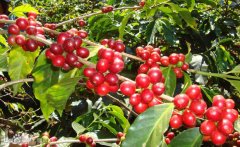
The Brazilian Hirado Prairie is one of the famous producers of Brazilian coffee.
The Brazilian Hirado Prairie is one of the famous coffee producing places in Brazil, with an area of 120W square kilometers, accounting for 22% of the national area of Brazil. Alimentos Farm, founded in 1974, is located in Brazil's Hirado prairie at an altitude of about 900 to 1000m. It has undulating foothills, rich landforms, obvious dry and wet seasons, large temperature difference between day and night, and obvious microclimate, so it is suitable for planting Ca.

The Brazilian Hirado Prairie is one of the famous producers of Brazilian coffee.
The Brazilian Hirado Prairie is one of the famous coffee producing places in Brazil, with an area of 120W square kilometers, accounting for 22% of the national area of Brazil. Alimentos Farm, founded in 1974, is located in Brazil's Hirado prairie at an altitude of about 900 to 1000m. It has undulating foothills, rich landforms, obvious dry and wet seasons, large temperature difference between day and night, and obvious microclimate, so it is suitable for planting Ca.

Costa Rican Coffee Manor Flavor and Taste introduce Fine Coffee beans
There are eight producing areas, of which Tarazhu, the Central Valley and the Western Valley are recognized as the three best producing areas. Las Lajas is located in the foothills of Sabanilla de Alajuela and Pos Volcano in the Central Valley. Strictly speaking, "Lajas" is actually the name of the Chakon family processing plant, and the name of the manor is Finca La Mirella.

Introduction to the characteristics of Ecuador Fine Coffee Flavor Manor
Ecuador is divided into the western coast, the central mountains, the eastern Amazon River basin and the four central regions of the Galapagos Islands, with diverse climatic conditions. The western coastal plain belongs to the tropical rain forest climate, with an average temperature of 23-25 ℃. The central Andes. The intermountain basin in this area belongs to the savanna climate, and the mountain belongs to the subtropical forest climate, with perennial snow above 4000 meters above sea level. Annual average decline

Introduction to Galapagos Coffee in Ecuador Coffee Manor
The Republic of Ecuador is located in northwestern South America. It is bordered by Colombia in the northeast, Peru in the southeast and the Pacific Ocean in the west. It covers an area of 256370 square kilometers and the coastline is about 930km long. The equator runs north of the border, and Ecuador means the Spanish equator. [3] Climate Ecuador is divided into the western coast, the central mountains, the eastern Amazon basin and the Galapagos Group

Introduction to the varieties of coffee beans produced by grinding scale and regional treatment in Berman Manor, Kenya
There are two types of coffee farms in Kenya. One is a large plantation that covers an area of more than five acres, but the average elevation is low. In the case of Kenyan coffee, the coffee beans of the large farms are of medium quality. The best Kenyan beans come from small farms, most of which are located in the foothills or volcanic slopes above 5,000 to 6,000 feet. Each small farmer has a capacity of only 20 to 70 bags per season.

Introduction to the method of flavor description and taste treatment for grinding scale production of Kenyan coffee beans
There are two types of coffee farms in Kenya. One is a large plantation that covers an area of more than five acres, but the average elevation is low. In the case of Kenyan coffee, the coffee beans of the large farms are of medium quality. The best Kenyan beans come from small farms, most of which are located in the foothills or volcanic slopes above 5,000 to 6,000 feet. Each small farmer has a capacity of only 20 to 70 bags per season.

Description of the characteristics and taste of high-quality coffee beans in Jinchu Coffee Variety producing area in Kenya
There are two types of coffee farms in Kenya. One is a large plantation that covers an area of more than five acres, but the average elevation is low. In the case of Kenyan coffee, the coffee beans of the large farms are of medium quality. The best Kenyan beans come from small farms, most of which are located in the foothills or volcanic slopes above 5,000 to 6,000 feet. Each small farmer has a capacity of only 20 to 70 bags per season.

Brazil Hirado Arimento Farm, Brazil Hirado Prairie is a famous coffee producing area in Brazil
The Brazilian Hirado Prairie is one of the famous producers of Brazilian coffee, covering an area of 120W square kilometers, accounting for 22% of the country's total area. Alimentos Farm, founded in 1974, is located in Brazil's Hirado prairie at an altitude of about 900 to 1000m. It has undulating foothills, rich landforms, obvious dry and wet seasons, large temperature difference between day and night, and obvious microclimate, so it is suitable for planting Ca.

Costa Rica Las Jas Estate Coffee Flavor Description Treatment Introduction
Costa Rica Las Jas estate coffee flavor description method introduced a total of eight producing areas in Costa Rica, of which recognized the three best producing areas, Tarazhu, Central Valley, Western Valley, Las Lajas (Las Lajas) is located in the Central Valley producing areas Sabanilla de Alajuela (Sabanilla de Alajuela), Pos Volcano foothills. Rahas is strict.

Lujiatu Rungeto Farmers' Cooperative Giando Kiangoi processing Plant in Chirijaga, Kenya
Professional baristas please follow the Coffee Workshop (Wechat official account cafe_style) Giando processing Plant is a member of Rungeto Farmers' Cooperative, located in the southern foothills of Mount Kenya, the city of Chirijaga in the central province. Lujiatu has three processing plants, including the oldest, Kii and Karimikui, which were founded in 1965.

African Kenya Meru coffee beans production area introduction Kenya coffee taste characteristics introduction
Professional coffee knowledge exchange More coffee bean information Please pay attention to coffee workshop (Weixin Official Accounts cafe_style) Kenya MERU (Meru) producing area small farmers planting coffee bean growing environment MERU (Meru) MERU: Most coffee in this area is planted by small farmers in Kenya foothills and Ny

Costa Rica Lajas Manor introduces eight Costa Rican coffee producing areas
There are eight coffee producing areas in Costa Rica, of which three are recognized as the best, namely, Tarazu, the Central Valley and the Western Valley. Las Lajas is located in the foothills of Sabanilla de Alajuela, the Pos Volcano volcano in the central valley. Lajas is the name of the Chakon family processing plant, and their estate has Finca La Mir.

Kenyan coffee treatment method
Coffee trees in Kenya are mostly planted at 1400 m-2000 m above sea level, and the growth areas include Ruiri, Thika, Kirinyaga and Mt. Kenya West, Nyeri, Kiambu and Muranga. Mainly in the foothills of Mt.Kenya and Aberdare. There are many producing areas in Kenya that strive to preserve the native forest ecosystem, protect the natural gene pool, and support the breeding of wild coffee varieties.
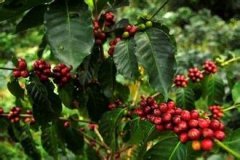
Bourbon variety PB coffee beans African Gilimaza Tanzania Kilimanjaro Pearl
The coffee producing areas of Tanzania are Moshi, Mbeya and other producing areas around the foothills of Kilimanjaro in the north, and the Songea-Ruvuma area where the Ruvuma river flows to the south. The style is slightly different due to the different growth topography. The coffee produced in Ruvuma, southwest of Tanzania, has wine and fruit aromas, which are different from those near Mount Kilimanjaro in the north.

The Galapagos Coffee Manor in Ecuador, which can be made into high quality mixed coffee, has a special flavor and taste.
The Republic of Ecuador is located in northwestern South America. It is bordered by Colombia in the northeast, Peru in the southeast and the Pacific Ocean in the west. It covers an area of 256370 square kilometers and the coastline is about 930km long. The equator runs north of the border, and Ecuador means the Spanish equator. [3] Climate Ecuador is divided into the western coast, the central mountains, the eastern Amazon basin and the Galapagos Group